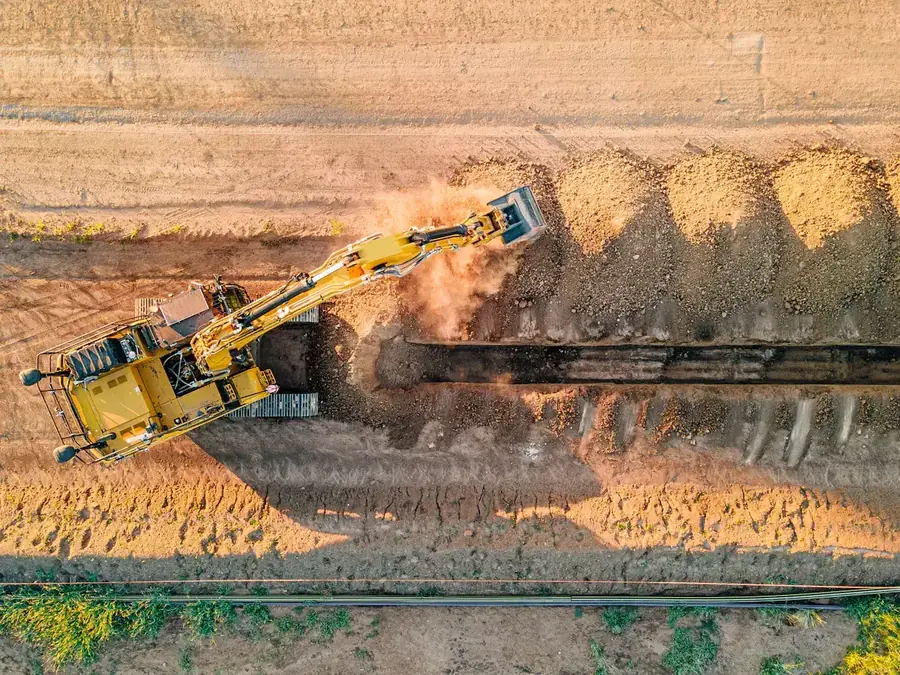
French Drain Installation in Nashville, TN
Nashville French Drains Co. installs exterior perimeter drains, interior drain tile, yard drainage systems, and sump pumps across Nashville and Davidson County. Free on-site estimates.
Professional French Drain Installation in Nashville, TN
French drain installation in Nashville TN requires understanding why Middle Tennessee drainage problems are different from other markets. Davidson County's heavy clay soil, Nashville's 47 annual inches of rainfall, and the rolling terrain throughout neighborhoods like Bellevue, Antioch, Donelson, and Green Hills create drainage conditions that demand properly sized, properly installed systems. A french drain that works in sandy Georgia soil won't last a decade in Nashville clay without proper geotextile fabric and correct pipe selection.
A french drain is a gravel-filled trench containing a perforated pipe wrapped in geotextile fabric. Water enters the trench through the gravel, flows into the pipe, and is carried via gravity to an outlet. The fabric prevents fine clay particles from migrating into the gravel and eventually clogging the pipe, which is the primary failure mode of improperly installed drainage in Nashville's clay-dominant soils.
We install french drains for three primary applications in Nashville: foundation perimeter protection, interior basement waterproofing (drain tile), and yard drainage for saturated lawn areas.
French Drain Systems We Install in Nashville TN
Exterior Perimeter French Drain
The most common drainage solution for Nashville homes with wet basements, hydrostatic pressure on foundation walls, or water pooling against the house. We excavate a trench to footing depth (typically 36 to 48 inches in Nashville), install a perforated pipe in gravel wrapped with geotextile fabric, and route the outlet to daylight or a sump pit. This is the preferred solution when the foundation exterior is accessible.
Interior Drain Tile System
When exterior excavation isn't feasible or a basement has existing interior finishes, we install interior drain tile beneath the basement floor slab at the footing. A narrow trench is cut along the perimeter of the basement floor, the pipe is installed at the footing level, and it connects to a sump pit with a submersible pump. This system captures water that enters through the wall-floor joint, which is the most common entry point in Nashville basements.
Yard French Drain
For Nashville homeowners with standing water in the yard, soggy areas that won't dry out, or erosion channels forming after rain, a yard french drain routes water from the saturated area to a lower outlet. We locate the low point collecting water, identify the outlet (street, storm drain, or swale), and design the trench path to move water efficiently. In Nashville's clay-heavy soil, proper geotextile fabric is especially critical in yard drains, which are more prone to root intrusion and soil migration than foundation drains.
Curtain Drain
On hillside properties throughout Davidson County, groundwater migrates down-slope and collects against the uphill side of the house. A curtain drain intercepts this water before it reaches the foundation by installing a horizontal drainage trench across the slope, uphill from the problem area. This is particularly effective in Nashville neighborhoods with significant grade changes, where conventional perimeter drains catch water that's already arrived rather than intercepting it upstream.
Why Middle Tennessee Clay Soil Matters for Installation
Davidson County's Cecildale and Mimosa clay loam soil series are heavy, plastic clays that exhibit significant shrink-swell behavior. When saturated, these soils expand and create hydrostatic pressure against foundation walls. When dry, they shrink and pull away from the foundation. This cycle is one of the leading causes of foundation movement in Nashville. A properly installed french drain that intercepts groundwater before it saturates the soil layer immediately adjacent to the foundation breaks this cycle and reduces foundation stress.
The same clay soil also means that drainage pipe material matters. We use rigid perforated HDPE or PVC pipe in all Nashville installations. The flexible corrugated black plastic pipe sold at home improvement stores collapses in compacted clay, has insufficient internal diameter, and corrugates that trap sediment. It's appropriate for light applications, not for a drain expected to handle Nashville's rainfall volumes for 30+ years.
The Process: What to Expect
We begin with a site visit to assess the drainage problem, identify where water is entering and accumulating, check the outlet options, and determine the appropriate system type. You'll receive a flat-rate written quote before any work starts. Typical installation: excavation, trench preparation, fabric lining, gravel base layer, pipe installation, gravel backfill, fabric folded over the top, and final backfill and surface restoration. Most Nashville projects complete in one to two days.
Why Nashville Has So Many Drainage Problems
Nashville receives an average of 47 inches of rain per year, spread across all four seasons with no distinct dry period. Middle Tennessee sees regular heavy rainfall events, and the clay-heavy soils across Davidson County cannot absorb rain fast enough when it comes in volume. Surface water has to go somewhere, and it typically goes toward the lowest point available, which on many Nashville lots is the foundation.
The rolling terrain throughout Nashville neighborhoods concentrates runoff in low spots. Homes at the bottom of a slope, in a swale, or with uphill neighbors whose runoff flows toward them are especially vulnerable. The Nashville metro's rapid growth has also created many neighborhoods where homes were built on marginal land with drainage challenges that weren't fully addressed during construction.
If you're seeing water in your basement after Nashville rain events, or if your yard has saturated areas that won't dry out between rains, the underlying cause is almost always addressable with a properly designed drainage system.
- Exterior perimeter french drains
- Interior drain tile systems
- Yard and lawn drainage
- Curtain drains for hillside lots
- Geotextile fabric on every install
- HDPE and PVC pipe, not flexible plastic
- Sump pump installation
- Free on-site estimates
Why French Drain Demand Is High in Nashville and Davidson County
Nashville's growth has been rapid and sustained. The metro added hundreds of thousands of residents over the past two decades, and with that growth came a massive wave of residential construction. Many of those homes were built on sites with marginal drainage that worked acceptably when built but has deteriorated as surrounding development changed the local hydrology.
The older Nashville neighborhoods, from Donelson to Bellevue to Madison, also have aging infrastructure. Homes built in the 1960s through 1980s often have footer drains that have silted up or failed entirely, and waterproofing materials from that era have a service life that's now exceeded.
Brentwood and Franklin to the south are seeing strong demand from new construction with clay fill and drainage designs that weren't properly graded. New development in Williamson County moves quickly, and some drainage work gets cut short. We serve both markets.
Ready to Fix Your Nashville Drainage Problem?
Free on-site evaluation. We assess the problem and give you a flat-rate written quote.